Seeing Without Watching: A Consent-First Framework for Home Monitoring Technology
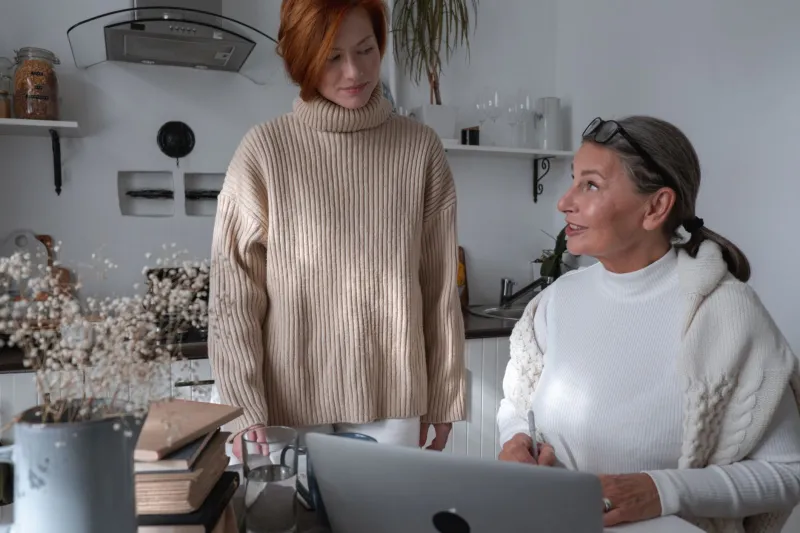
Doorbell cameras, motion sensors and smartphone apps have become ordinary features of UK homes. For families supporting an older relative, they promise something powerful: a way to know that all is well without constantly ringing to check. Yet the same devices can change the atmosphere of a parent’s home. A camera above the front door may feel to an adult child like prudent reassurance; to the parent, it may feel like being watched. To a paid carer, it may feel like being audited. The question is not whether technology belongs in home care. It is how to choose and govern it so that it supports dignity rather than eroding it.
The reassurance case is real, but incomplete
There are sensible reasons families turn to monitoring technology. A parent living with early dementia may open the door to strangers, leave the house unexpectedly, or fail to answer the phone for hours. A fall in the night may go unnoticed. A family member working full time may worry constantly. A discreet sensor or doorbell alert can reduce that anxiety and prompt a timely response.
But reassurance is not the only outcome. Technology changes relationships. A parent may begin to feel that ordinary comings and goings are being logged and judged. A carer may feel that every visit is being observed, which can encourage defensive practice rather than open communication. A family may find itself reacting to alerts without context, turning small irregularities into emergencies. The practical test is not whether a device can be installed, but whether it improves care while preserving the parent’s sense of control.
Consent is a continuing conversation, not a signature
In the UK, consent is central to how personal data should be handled under the UK GDPR and the Data Protection Act 2018. For families, the principle is simpler than the legislation: a parent should understand what is being monitored, why, who will see it and for how long. Consent should be specific and revocable. It should not be buried in a device set-up screen or assumed because a son or daughter paid for the equipment.
Capacity matters. A parent with fluctuating capacity may be able to consent to some things on some days but not others. Where a lasting power of attorney or deputyship is in place, the attorney’s role is to act in the person’s best interests, not to override their wishes without careful consideration. A family should record the parent’s views, including any boundaries, such as no camera in the bedroom or no app notifications after 9pm. These are not technical settings. They are expressions of dignity.
The carer’s perspective belongs in the decision
Home care workers are often the people most affected by monitoring technology and least consulted. A doorbell camera that records arrivals and departures can be useful for checking that visits happen, but it can also create a sense of suspicion. A camera in a living room may capture conversations, personal care or confidential information. Carers have their own rights to privacy and a professional interest in working in a respectful environment.
Before installing anything that records or observes, families should discuss it with the care provider. Reputable providers will have policies on cameras, recording and data sharing. They may ask for written consent from the carer or explain that certain areas are off limits. This is not obstruction. It is part of providing safe, dignified care. A simple rule helps: if a device would feel intrusive to a visiting professional, it probably needs reconsidering.
Choose the least intrusive tool that does the job
Technology ranges from passive and limited to active and pervasive. A doorbell camera that alerts only when someone approaches is different from a living-room camera that streams continuously. A bed sensor that detects a fall is different from a GPS tracker that follows a parent’s every move. Families should start with the least intrusive option that meets a defined need.
Useful questions include: What specific risk are we trying to reduce? Could a telephone call, a key safe or a scheduled visit achieve the same result? Does the device collect more data than we need? Who can access the footage or alerts? How long is data kept? Can the parent switch it off? A device that cannot be explained simply to the person using it is probably too complex for the home.
A simple family agreement for home monitoring
A written family agreement does not need to be legalistic. It should be short enough to review and specific enough to guide decisions. It might cover:
- Purpose: the particular concern the technology is meant to address, such as nighttime falls or unanswered doors.
- Inventory: what devices are installed, where they are, and what they record or detect.
- Consent: the parent’s agreement, any limits they have set, and how consent will be reviewed if their needs change.
- Access: who can see alerts or footage, and how requests from the parent or carer will be handled.
- Retention: how long data is kept and who deletes it.
- Carer communication: what the care provider has been told and what carers have agreed to.
- Review date: a fixed point, perhaps every three months, to ask whether the technology is still wanted and still proportionate.
- Exit plan: how devices will be removed or disabled if the parent changes their mind.
The agreement should be kept with the care plan and shared with the care provider where relevant. It is a living document, not a one-off permission slip.
When reassurance tips into surveillance
Warning signs are often emotional rather than technical. A parent may stop inviting friends round because they feel observed. A carer may become reluctant to sit and talk because a camera is present. Family members may start checking footage compulsively or interpreting normal activity as a crisis. If the technology is increasing distress, it is not working, even if it is producing alerts.
In those circumstances, families should pause and ask what problem the device was meant to solve. Sometimes a different arrangement works better: a daily check-in call, a companion visit, a key safe for trusted neighbours, or a review of the care plan. Technology should serve the relationship, not replace it.
A balanced position for 2026
The range of consumer devices available in 2026 is wider than ever, and the temptation to add another sensor or app is understandable. But good home care is built on trust, communication and consent. Monitoring technology can support those values when it is chosen carefully, explained openly and reviewed regularly. It becomes a problem when it is installed to manage anxiety rather than to meet a defined need.
For families, the most useful question is not ‘What can we monitor?’ but ‘What would help this person live well at home, and what would make them feel less themselves?’ A doorbell camera may be part of the answer. It should never be the whole answer.